In these times of uncertainty and boredom-inducing confinement, I decided to share three images I took recently that made me quite happy and unveil some of the secrets and tricks that went into making them.
In this article, I will avoid talking about gear since most of the current cameras can take perfectly fine pictures for social media. Instead, I’m going to focus on what makes a photograph stand out and how you can try to improve your creativity by approaching product photography more artistically.
I think a good starting point (and something to keep in mind while reading this article) is Ming Thein’s view on The Four Things for making a compelling image (coincidentally, Ming is also the creative mind behind Ming watches *mind blown*):
- Quality of light
- Clarity of subject
- Balance of composition
- ‘The Idea’
Maurice de Mauriac L3 — the not-that-flat-lay
Flat lays became quite popular in the Instagram “influencer” age, and websites like Hodinkee helped to spread this style of photography in the watch community. They’re quite effective in presenting the watch in a real-life environment, but they always seemed (for the lack of a better term) too flat for me.
For that reason, every time I do a “flat lay” I try to place the camera at a 45-degree angle, instead of being parallel to the table/background and I put the watch on a display stand with its strap closed. In practical terms, this means that the watch is now placed closer to the camera than the background, and there’s still lots of space to scatter some props around it!
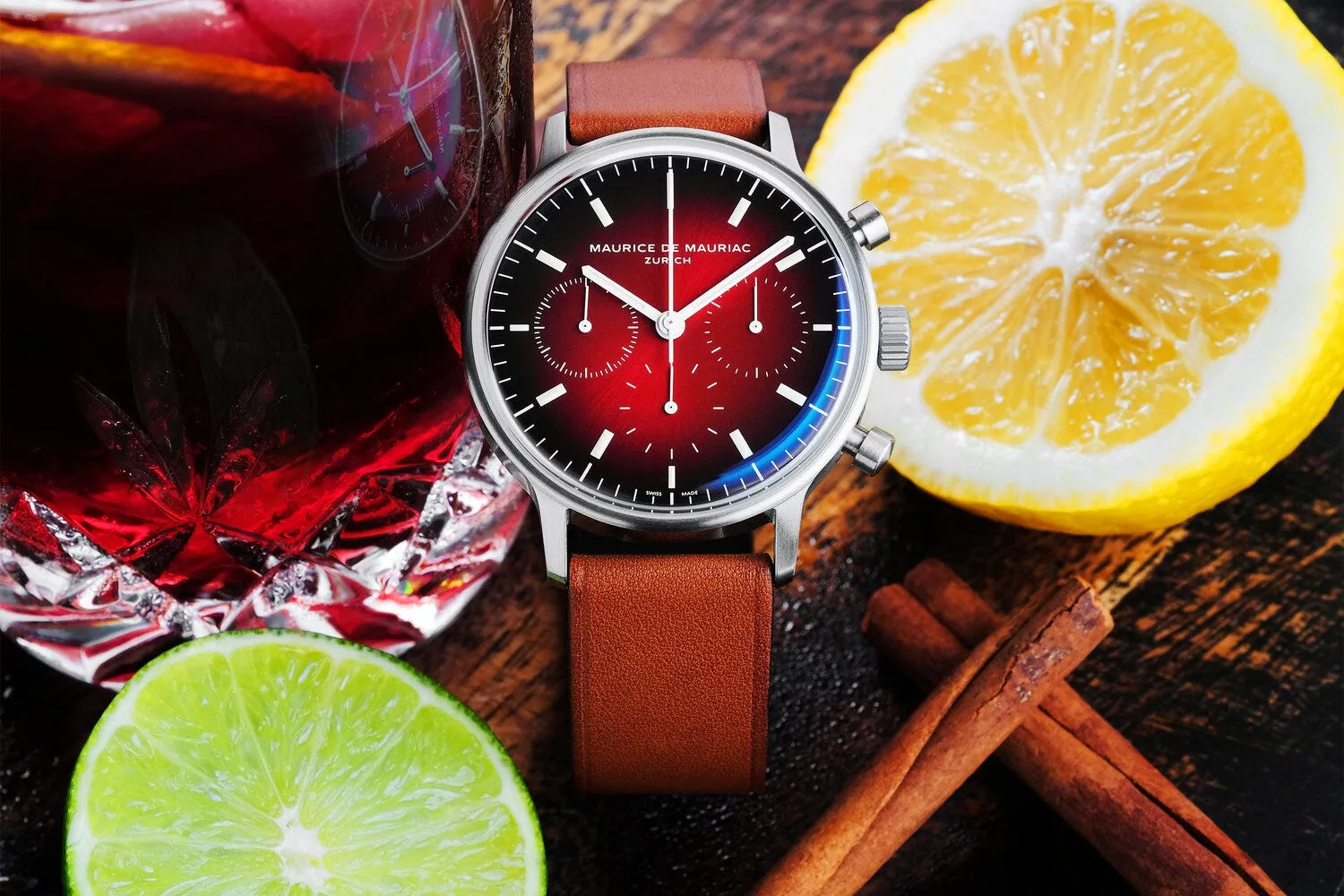
I got to photograph this red dial Maurice de Mauriac L3 Chrono on a very warm summer day, so I wanted the image to reflect that summer mood. In the end, I decided to highlight the red dial and the fact that the brand isn’t afraid of playing with colours by pairing it with a glass of sangria!
I used a chopping board as a background (for that rustic look) and all the props were sprayed with water before the shoot to simulate the condensation from the cold drink.
It was only when I was editing the picture that I noticed the watch dial reflected on the glass and the blue glow from the crystal AR coating. Happy little accidents!
The tip: always try to add depth to the photo, by avoiding flat compositions and adding objects in the foreground and background to make a photo look a bit more tridimensional.
Seiko Mini Turtle — is imitation the best form of flattery?
I always browse the internet with an attentive eye, looking for cool photographs and inspiration to apply on watch photography — and it happens that some watch brands are a great source of creative juice (take as an example, the photomontages made by Nomos!)
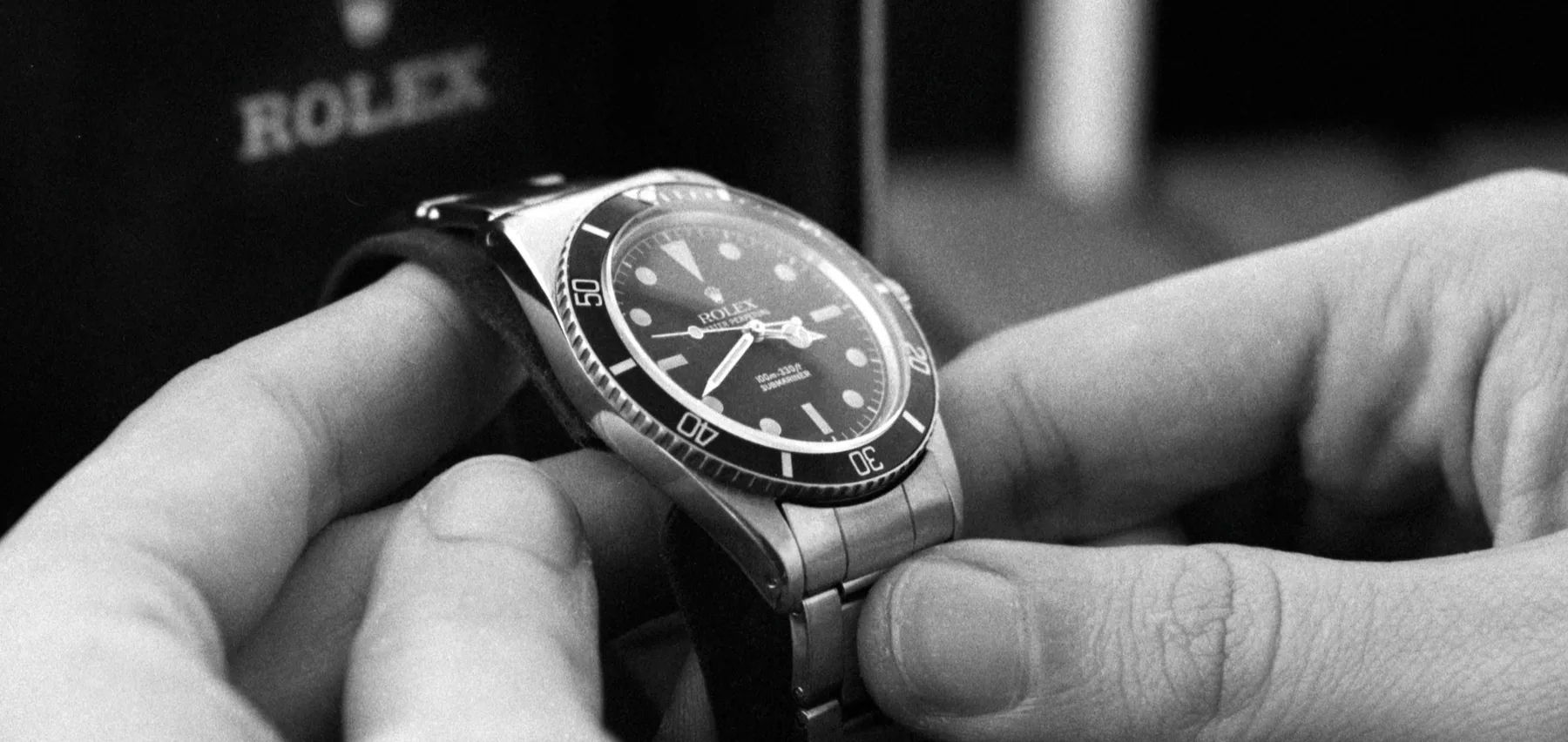
The idea for this picture, however, came after falling in love with this photo from MB&F. It pictures a fascinating watch being held by a woman in an almost surreal and effortless way, while the light has a soft quality to it that gives it a dreamy look. The whole picture looked so elegant and relaxed, that I decided to give it a go — how hard could it be?
The answer? A lot.
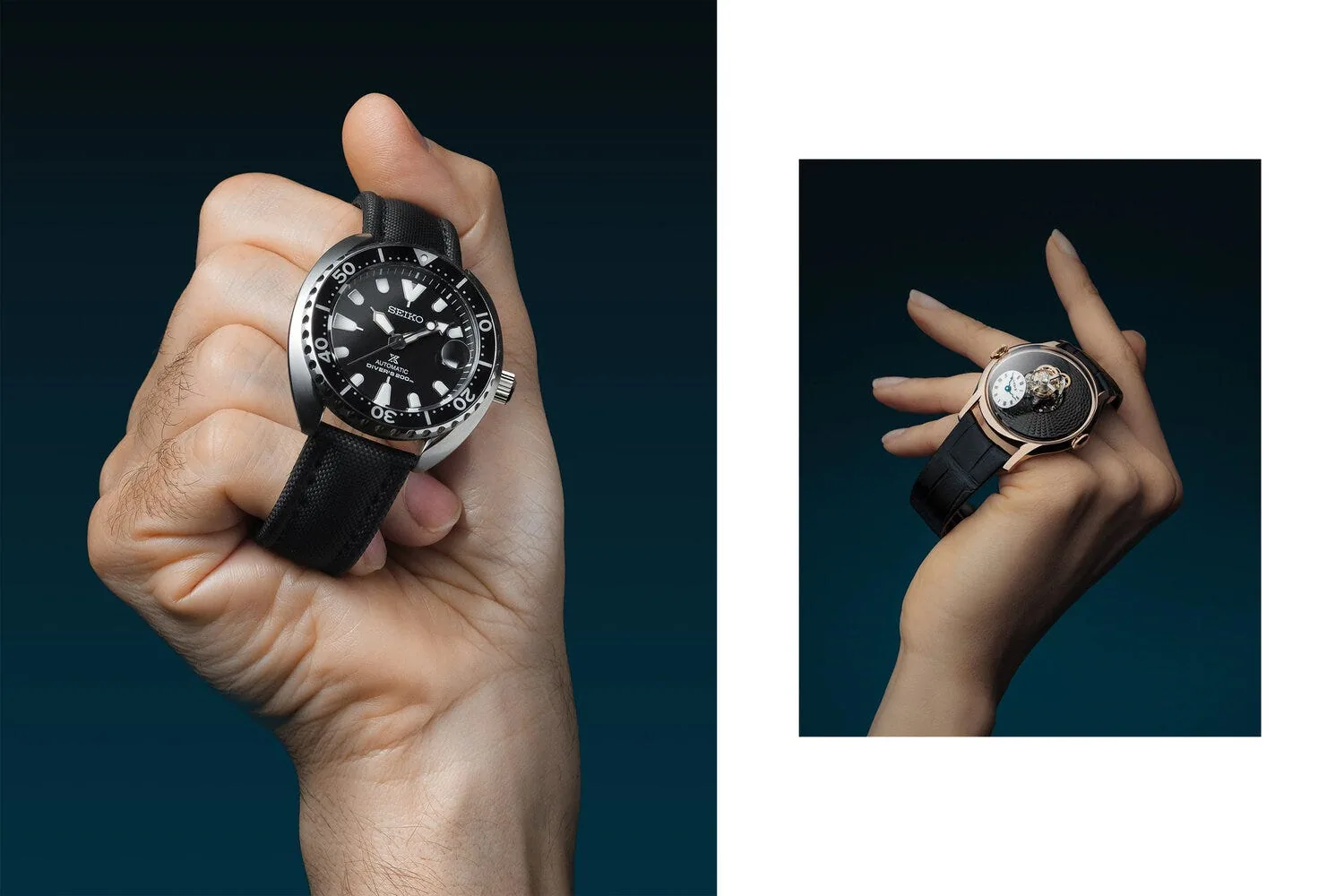
I had to recruit my father to serve as the “hand model” for this photoshoot, and after a few seconds of handling my Seiko, we both realized that the pose from MB&F’s photo was too feminine and very tricky to do without dropping the watch! As a plan B, we decided to adapt to a more masculine pose, but keep the framing and the tones very similar to the original.
I couldn’t get that beautiful diffused light from the original photo, but I did my best with the lights I had — in this case, a flash inside a medium-sized softbox.
Although most of my pictures are composites of several photos to make sure that all the watch parts are perfectly lit (I previously wrote an article about this topic), this picture was taken handheld and on a single shot, after many tries and variations on the pose.
How I Edit My Watch Pictures
Let me guide you through the exciting world of Photoshop and composite photography, from importing to the final result!
medium.com
I did, however, replace the black background with the blue gradient to match precisely with the MB&F photo in Photoshop, since it’s almost impossible to colour match a gradient in-camera.
The tip: don’t be afraid to get out from your photographic comfort zone — get inspired by other photographers, try to recreate what inspires you, learn and enjoy the process
TAG Heuer Autavia — Corn Flake dial?
Every year I try to set up some goals and challenges for my photography, and in 2020 I decided to explore how to incorporate motion into watch photography — Time is a dynamic subject, after all!
It’s not as easy as throwing stuff at the camera and pressing the shutter, though. Watches are quite delicate objects and require working on a macro range, so any small vibration or shift in the watch will inevitably end up in a blurry image.
Another challenge of the high magnification is that moving things pass fast through the frame, so there’s less than a split second to capture motion where we want it to be.
The solution for these two difficulties is using a flash to freeze the action (instead of continuous or natural light) and many, many tries.
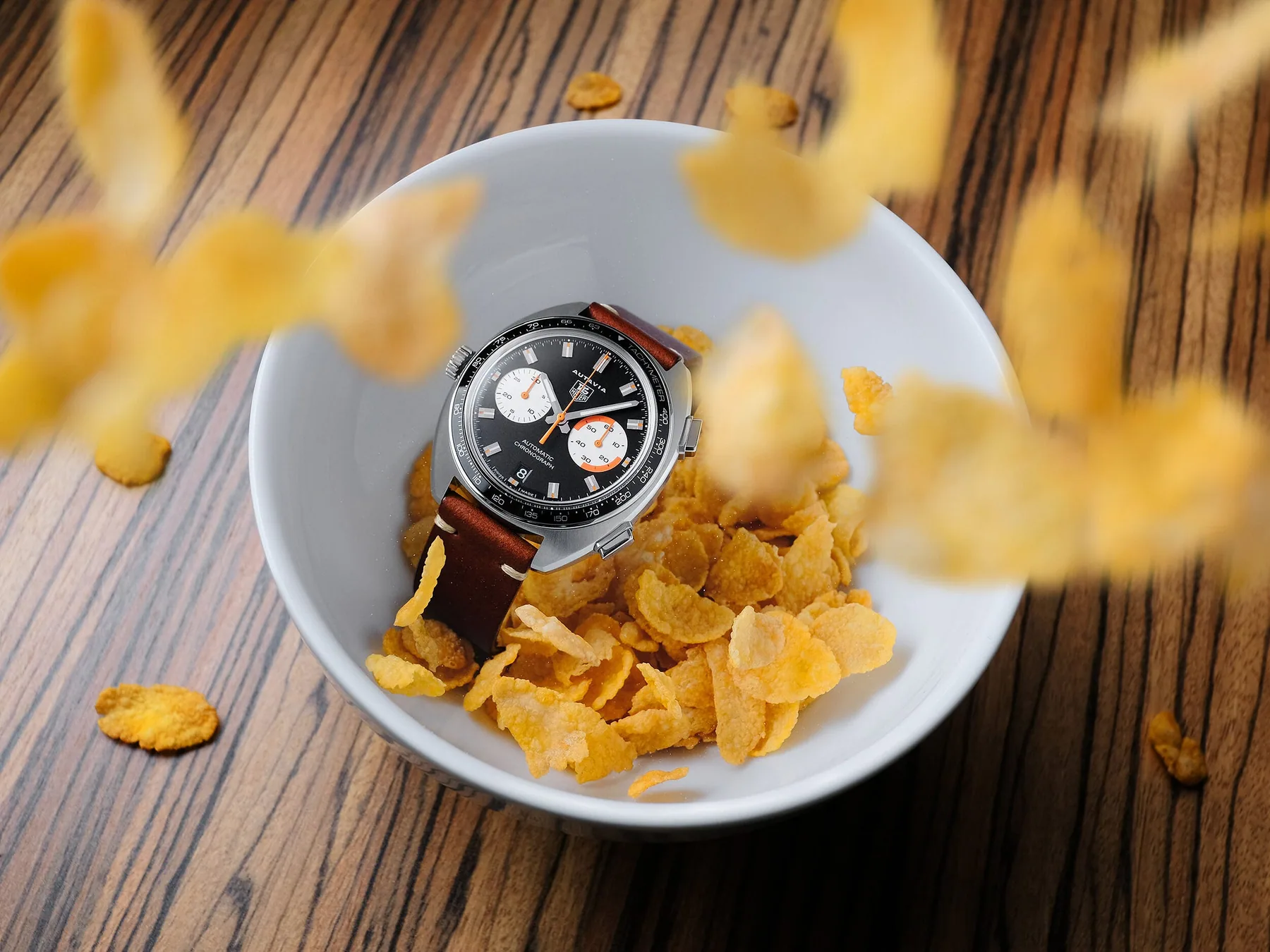
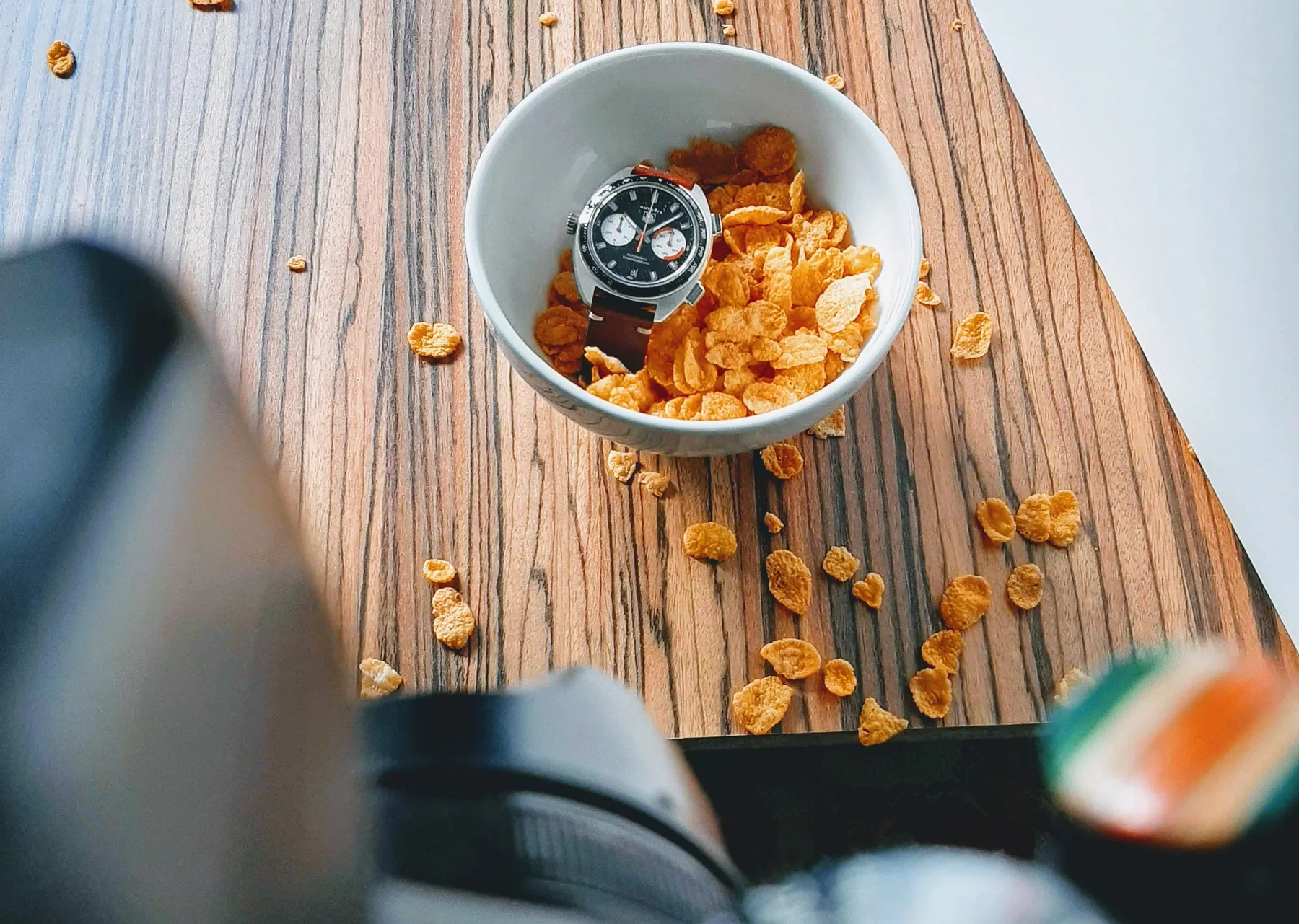
For this photo, I decided to place the Autavia inside a bowl on a wood table, and drop some Corn Flakes to add motion and visual interest to the image.
My favourite details were the small pieces that bounced on the bowl and look as if they are floating close to the watch, surrounded by tiny dust particles that were caused by the impacts!
The choice of flakes and table material was intentional since I wanted to highlight the dial’s orange accents, and both the wood and the flakes have orange tones as well (brown is just a darker shade of orange, after all!). I find colour theory a very interesting field, and using analogous colours on your compositions (for example, various tones of orange) leads to a balanced result, so it’s something that I always keep in mind while creating a set.
The tip: wrist shots are cool, but think about ways to incorporate motion and dynamic in your photos for that extra visual punch. Photograph your watch while doing some activity, and take many photos until you make sure you got the right timing!
This story was originally published by the author at The Daily Diogo Costa.
Bruno Candeias is a photographer and watch journalist based in Lisbon. He writes here whenever there is something worth writing.