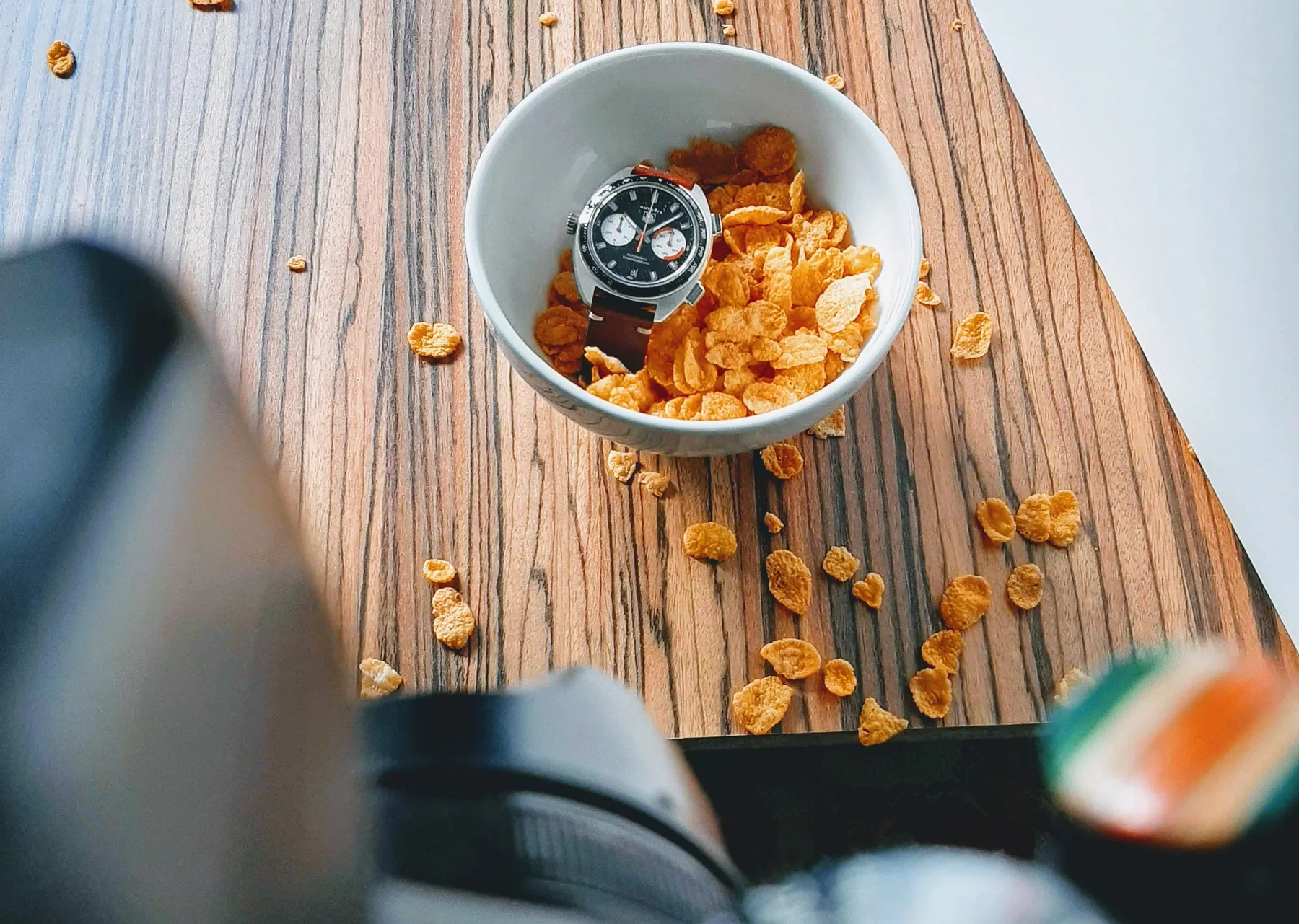
Mechanical watches and analogue photography have a lot in common. Much like the way a watch keeps time, a mechanical film camera uses gears and springs to measure the fraction of time needed to record an image, all without requiring batteries.
These similarities were what led me to watches for the first time: coming from a background in engineering and photography, these small and intricate objects fascinated me. From there, I went down the rabbit hole trying to of learning their history, eventually coming to photographing them. I usually photograph watches with a digital camera and edit the pictures thoroughly to get a perfect image but this time I decided to challenge myself: what if I tried to photograph watches, using my favourite old film camera?
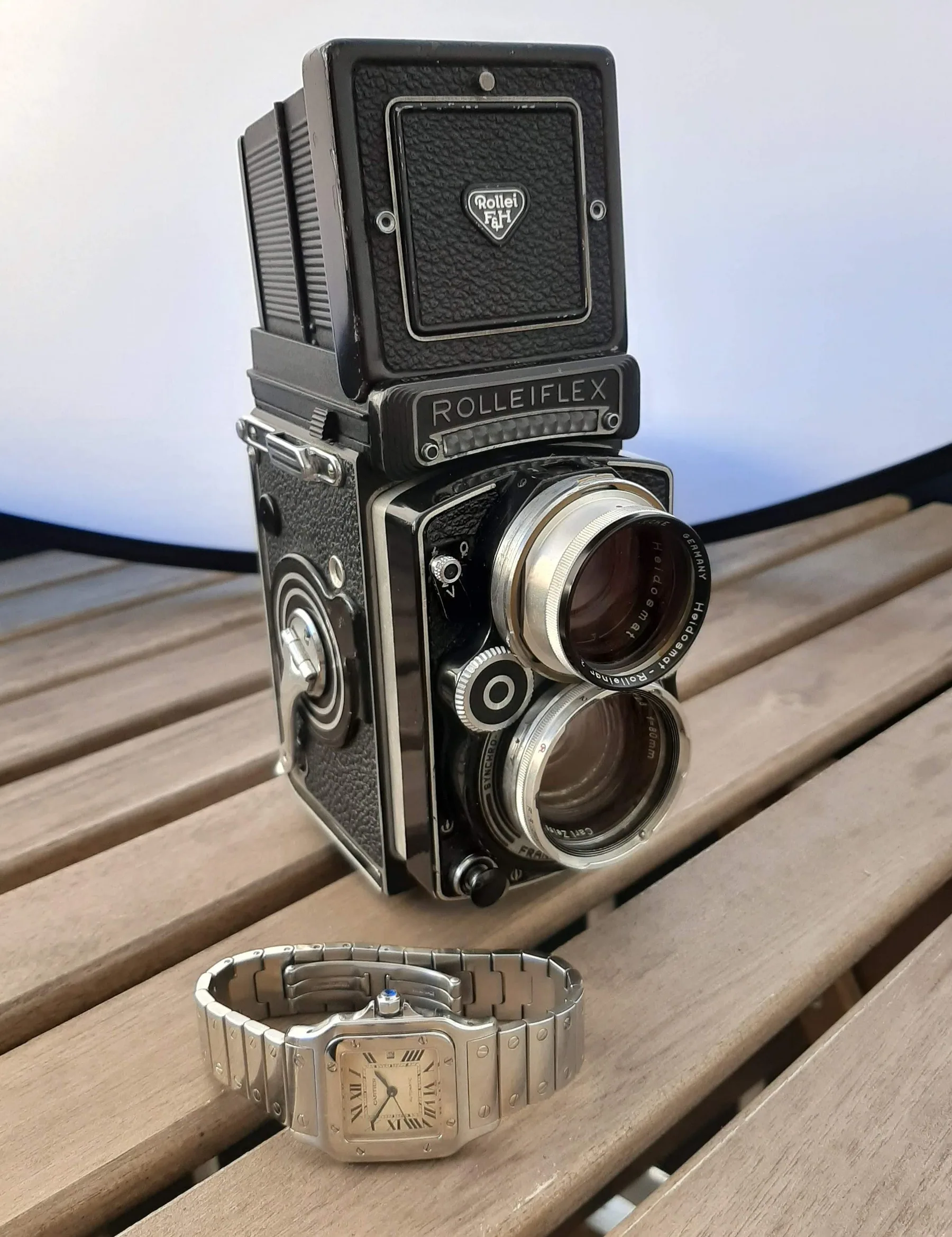
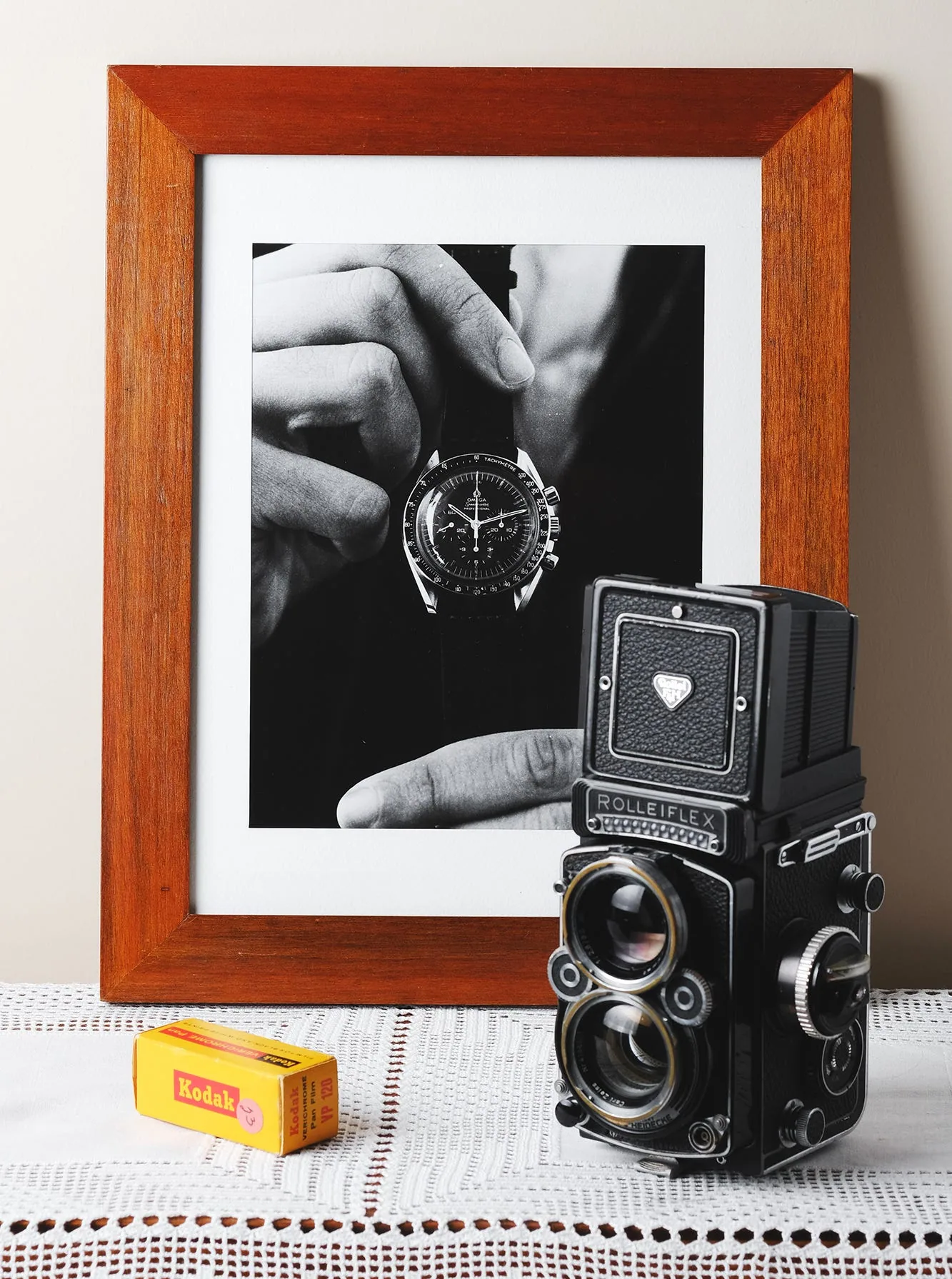
When it comes to cameras, the Rolleiflex 2.8F is arguably one of the best mechanical examples ever made. Introduced in 1960, it was the culmination of years of development by the brand, and it became the choice of several artists from that period (Helmut Newton, David Bailey, Richard Avedon and Vivian Mayer, just to name a few). It had a sharp and bright 80mm lens, compact dimensions and a silent shutter, perfect for portraits and press photography.
Because I got mine from my uncle (who in 1973 bought it from a journalist), the camera was already fairly worn when it got to my hands and it required an extensive service to work properly again.
At this point, I should highlight some limitations of using this style of camera to photograph watches:
- it has a fixed lens, i.e. you zoom using your feet;
- the minimum focus distance is 1 meter (39 inches);
- the camera uses medium format film instead of the more common 35mm, fitting only 12 photos per roll;
- you frame and focus the image by looking at the focusing screen on the top of the camera, and the image is flipped horizontally (left is right, and vice versa);
Back in the 60s, any Hasselblad or 35mm SLR camera would be way more fitting for product photography and advertising, since they could be fitted with a macro lens, and their mirror and prisms allowed for an exact preview of the final image.
Fortunately, Rollei thought about the close focusing problem and produced a set of add-on filters that made the task I now had in my hands possible. They were called Rolleinar and acted as a set of goggles for the camera, as you can see in the picture below. They also offered a prism viewfinder to solve the image flipping problem, but I’m yet to find one in a decent condition to add to my collection.
The top element of the Rolleinar is larger by incorporating a prism that corrects for close focusing parallax, ensuring that what you see is more-or-less what you get (keep in mind that the lens that records the image is the bottom one, while the top lens is only used for focus and framing).
I’ve become quite used to this camera and the way it operates over the years, but this photo session presented new challenges! Watches are very small objects (even the IWC Big Crown, by far the largest watch in the store, is only 46mm wide!), so making sure they were in focus was more difficult than I anticipated.
In working with such proximities, framing is also quite difficult due to the image being flipped on the viewfinder — as the mirror reverses the viewfinder image from left to right, it was common to point the camera the wrong way!
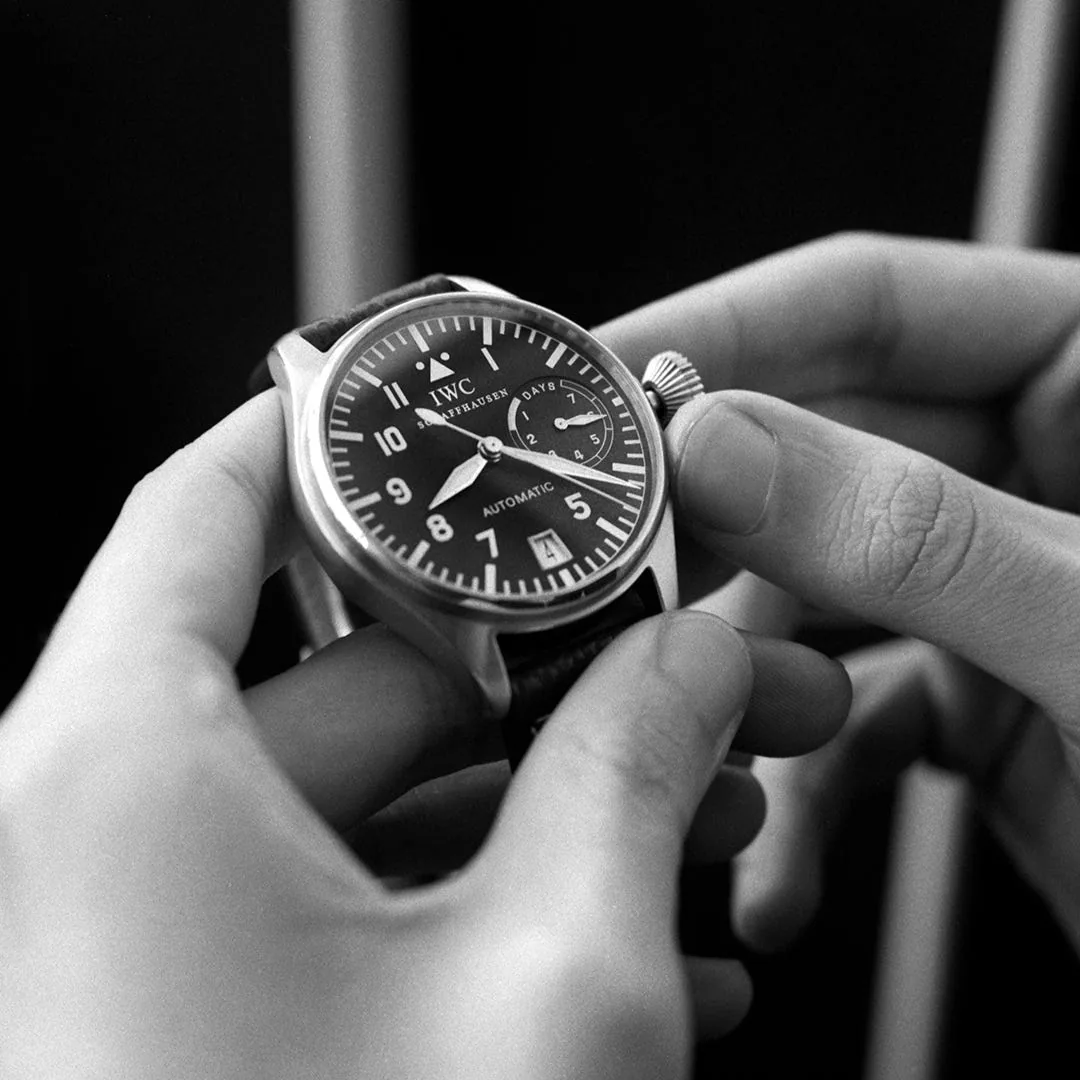
It helped a lot to have a friend and fellow watch geek to pose with the watches and hold the diffuser (a fabric disc I used to create a soft light and avoid reflections).
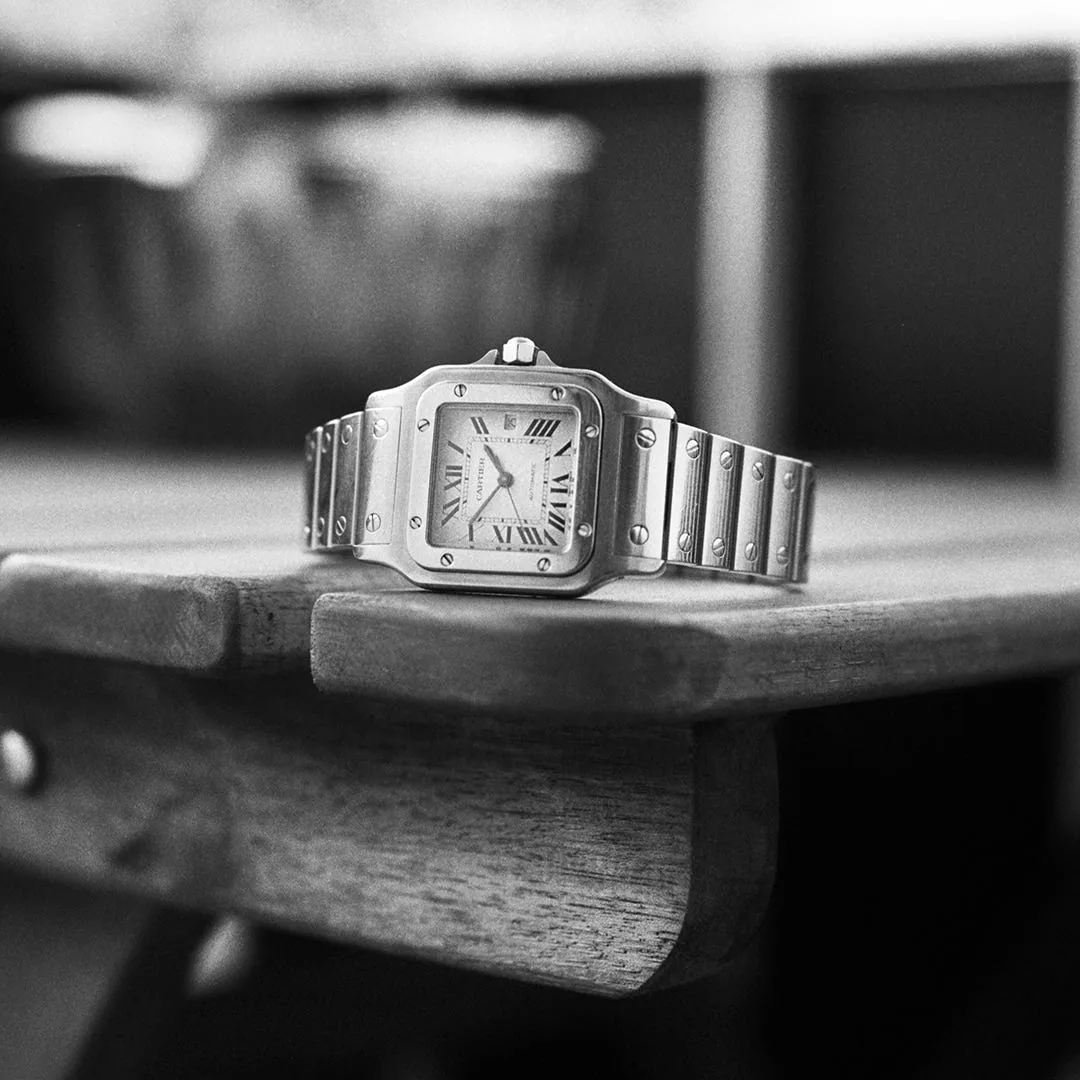
In the end, the best pictures were the ones where the watch face is parallel to the camera: the lens is very sharp, but at this close range the depth of field is so shallow that it’s quite easy to end up with a blurred dial — a big no-no when they’re the main subject of the photo. You can see in the Cartier photo below how thin the focus plane is, since the edge of the table right in front of the watch is already blurred!
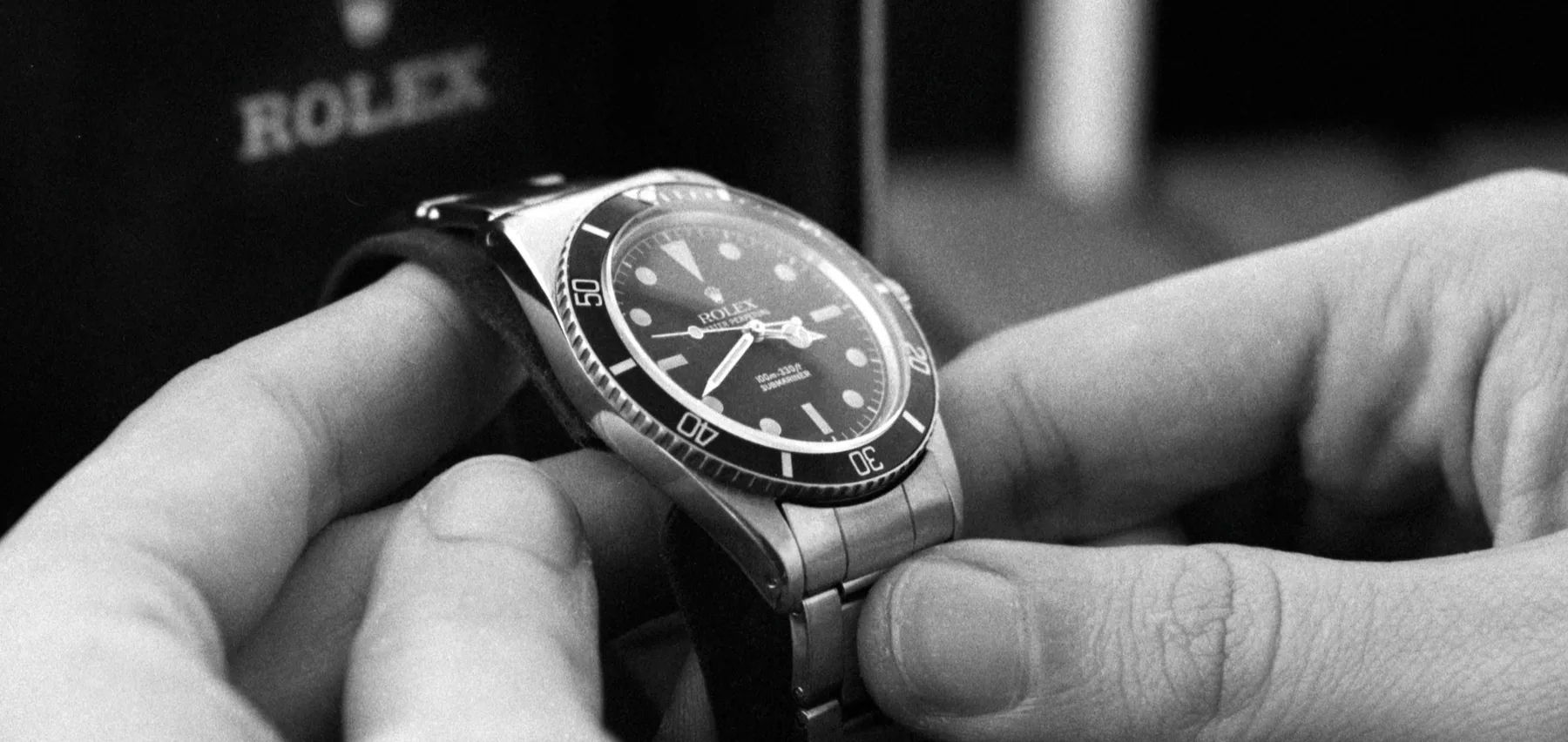
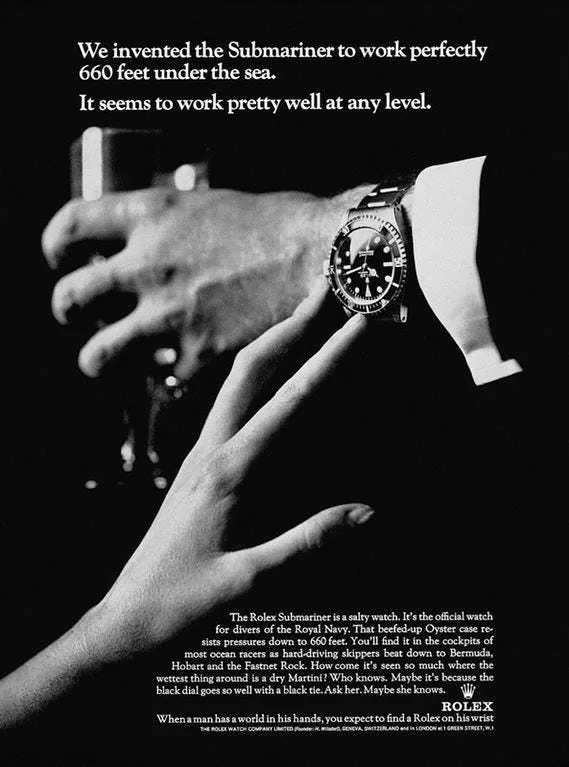
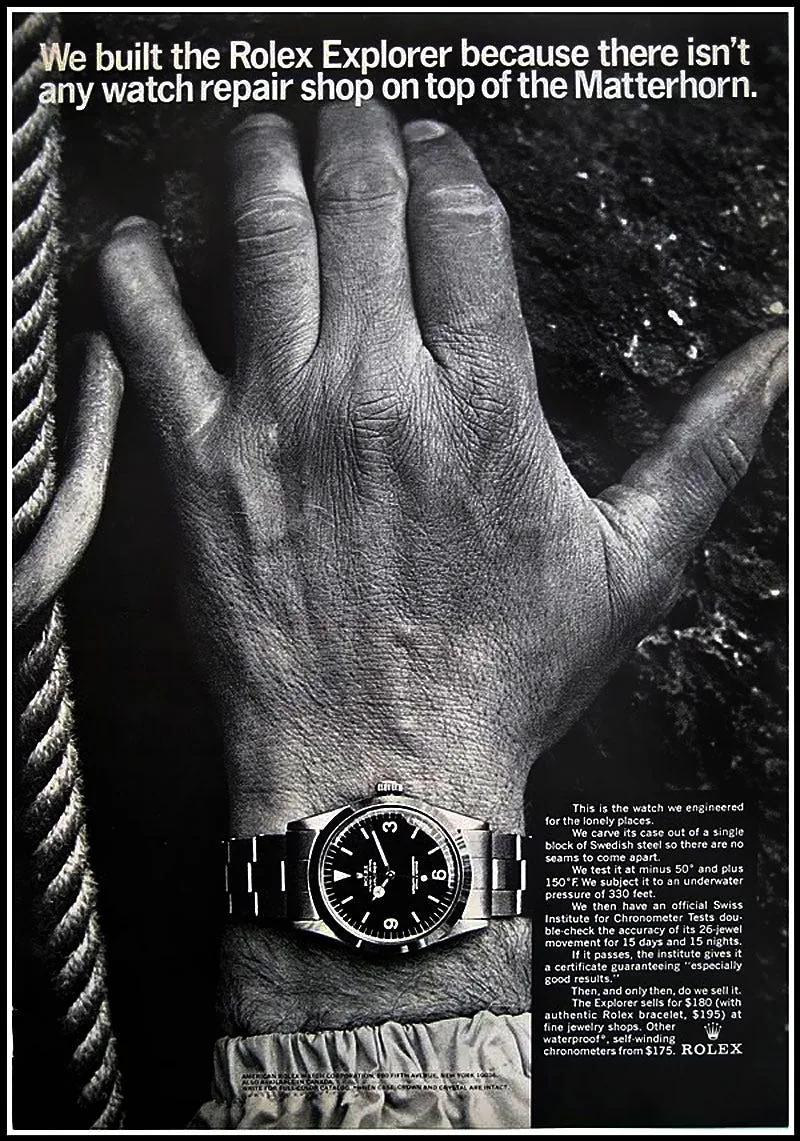
As some of you might have guessed by now, this session was a tribute to the Rolex ads from the 1960s, using an identical technique to what was used to make the (now famous) magazine shots that elevated the brand to cult status. As a happy coincidence, we even photographed an identical piece to the one featured in the Rolex ad below.
Back then, the watches were displayed being worn on the wrist and in both formal and adventure environments, showcasing their versatility and ruggedness. The prints were bold, featuring deep blacks, bold fonts and cheeky punch lines!
Due to the simplicity and effectiveness of these ads, they have aged quite well and are still coveted by watch enthusiasts, with websites such as ad patina dedicated to sourcing high-quality examples, perfect for framing and displaying at home!
Over the years, Rolex has matured, surviving the dreaded quartz crisis that ended several Swiss watch companies that tried to compete with the lower-priced Japanese battery operated watches. Through a mix of stubbornness and clever marketing, the crown brand established itself as one of the most famous in the world, while remaining true to its origins.
They still invest huge sums of money in marketing, but conservatively, by supporting the most prestigious culture and sports events, as well as maintaining a network of highly accomplished ambassadors.
On the other hand, Rollei struggled to adapt to the modernisation of cameras and the digital era, losing the fight to the Japanese brands. After several changes in leadership and attempts of rescue, the brand ended up declaring itself insolvent in 2009.
I enjoyed the opportunity to mix two of my favourite hobbies on a single photo session, by combining luxury watches with traditional photo techniques in what felt like being on a time machine.
I believe the current vintage trend we are experiencing (in watches and photography, as well as cars, music, fashion and so on) is due to the simplicity and history that these objects evoke, acting as symbols to make us slow down and enjoy the present, while living in an overstimulated society, where we are always searching for the new shiny thing to replace what we currently have. These watches feel like an authentic connection to the past, a topic that Allen Farmelo has explored in detail in his podcast, Beyond the Dial.
Despite the challenges, I ended up with 7 good photos out of the 12 that I shot on a single roll of film. I also printed some of the negatives in a darkroom using only light and chemicals, ensuring that the whole process from shoot to print was 100% computer-free!
I’d like to finish this article by thanking Diogo Costa and Assis&Sons for their patience and for allowing me to photograph their beautiful shop and watches!
Bruno Candeias is a photographer and watch journalist based in Lisbon. He writes here whenever there is something worth writing.