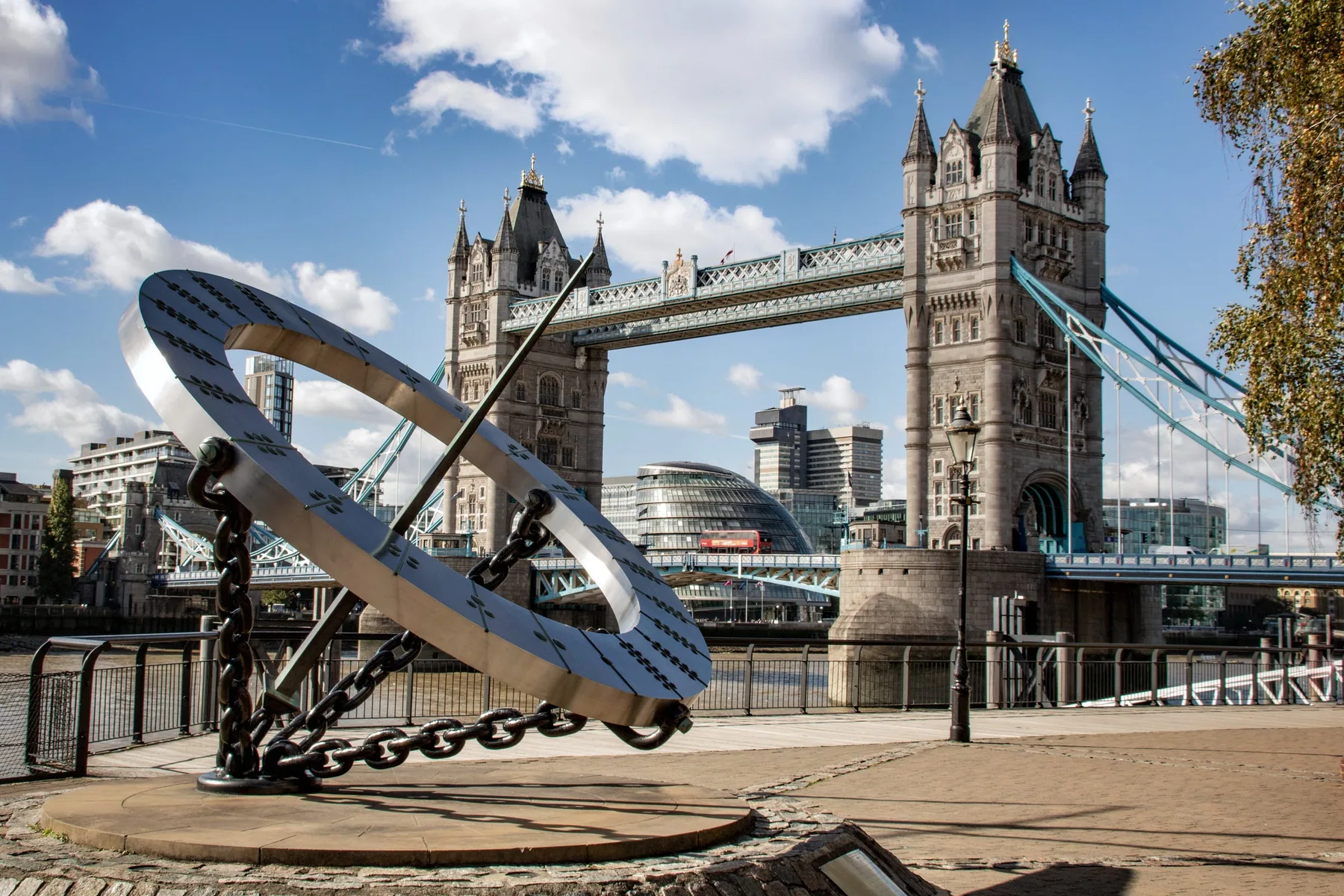
Iconic bridges throughout the world, such as Golden Gate, Tower Bridge, or Sydney Harbour Bridge, represent a perfect blend between form and function — some of them are even considered to be true monuments and works of art.
Being both a civil engineer and a watch enthusiast, these two areas have always drawn my attention. In this article, I will show you that the two share more in common than you might initially think.
Without bridges, there would be no watches
The 18th century marked the start of a new era in watchmaking, thanks to the inventions of brilliant minds such as Jean-Antoine Lépine.
Back then, pocket watches were very exclusive objects, custom made to the wishes and desires of royals.
Their movements used two full plates spaced with pillars, a balance wheel its top, and included a complex fusee and chain mechanism to control the power delivery. All these factors resulted in very thick and difficult to produce timepieces.
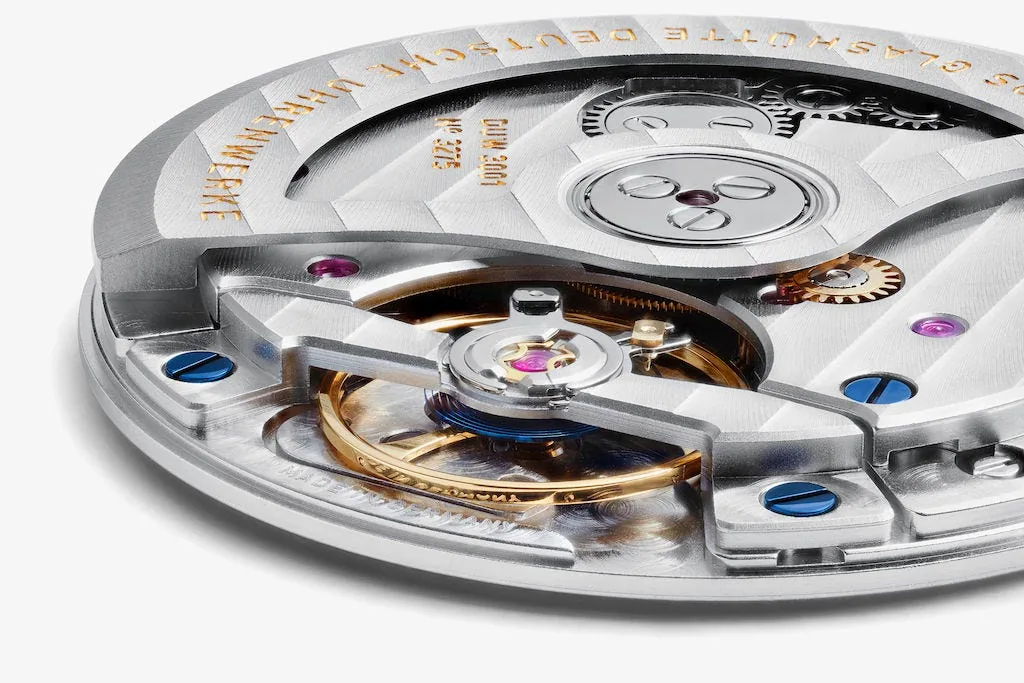
Around the year 1770, Lépine decided to change this reality by introducing his latest idea — the ‘calibre à pont’, also known as ‘Lépine calibre’. The watchmaker dispensed the fusee and its chain and replaced the top plate and pillars with individual bridges for each cog and wheel.
His work deserved him the titles of maître horloger (master horologist) and Horloger du Roi (Clockmaker to the King).
Along with Ferdinand Berthoud, Lépine was the master of Abraham-Louis Breguet, considered one of the best watchmakers of all time. Breguet perfected the use of movement bridges that Lépine pioneered, and some of the modern examples from the brand proudly display their bridges and gears through open dials.
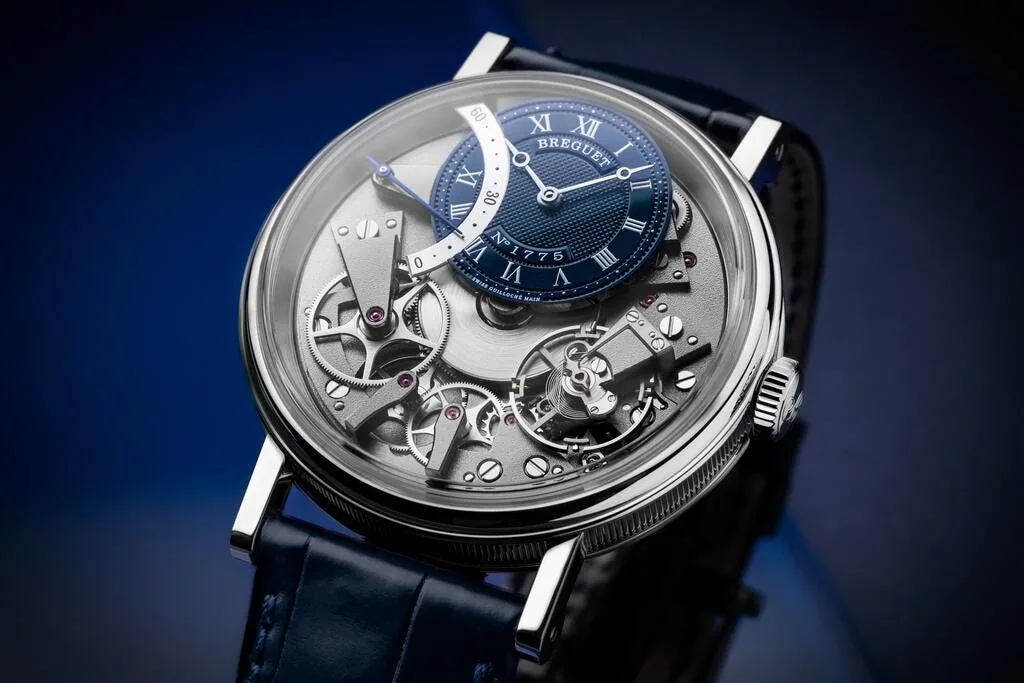
The use of bridges in movements was crucial to the development of watches small and sturdy enough to wear on the wrist. Despite the improvements in material science and watchmaking techniques, the principles introduced by Lépine are still similar to the ones used in watchmaking to this day.
That doesn’t prevent the current generation of independent watchmakers from innovating, though: from the Corum Golden Bridge with its baguette movement suspended on a single bridge to the crazy MB&F balance wheels suspended on long arching bridges, there’s still plenty of room for creativity!
Some Watches have Bridges on their dials
While some brands use open dials to display the watches’ bridges and gears, others prefer to take a more literal approach by placing actual bridges on the dial!
One such example is the Pont des Amoureux (‘lover’s bridge’) by Van Cleef & Arpels, part of their ‘Poetic Complications’ line.
According to the brand, these watches “(…) provide a unique vision of time, in which savoir-faire and technical prowess combine to bring stories to life”.
Cool.
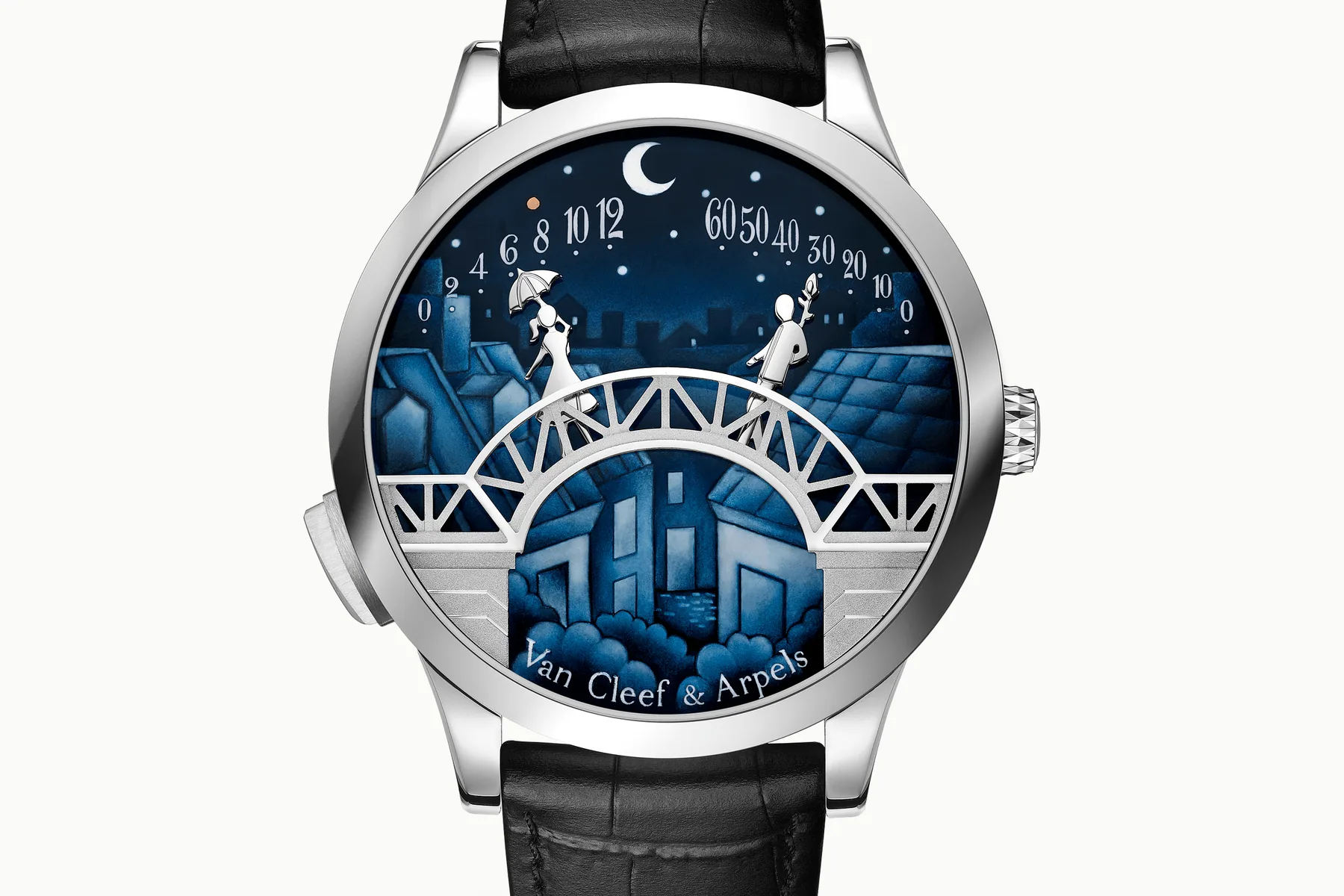
This watch uses retrograde hands to display the hours and minutes, shaped like a pair of lovers separated by a bridge.
As time passes, the couple walks across the bridge, culminating in a 3-minute long kiss every twelve hours. The brand’s website shows an animation of this beautiful choreography.
For the most impatient wearers, their latest model now features a button at four o’clock, that when pressed unites the couple on-demand at any time of the day for a quick kiss, before returning to their time accurate positions — technically impressive, but perhaps a bit too voyeuristic!
According to Van Cleef & Arpels, the dials draw inspiration from a Parisian scene, considered by many the city of love. I can imagine a passionate wondering couple kissing under the moonlight while strolling through the Pont des Arts, with its elegant steel structure that resembles the one shown on the dial.
Unfortunately, the watch sells for 122.000 €, the proof that even love can come at a cost!
Rolex once made a bridge (literally)
It’s almost impossible to write an article without mentioning the ubiquitous Rolex, so the third curiosity goes to the crown brand.
Even though every year Rolex produces millions of tiny bridges for their watch movements, there is a larger scale one that stands out in Geneva’s landscape.
The story begins in 1945, when Hans Wilsdorf, the businessman and founder of Rolex, created a non-profit foundation to which he later handed over his 100% ownership stake in Rolex. Bearing his name, the foundation still owns Rolex to this day and donates a large sum of their income to social causes as the Environment, Science, and Arts.
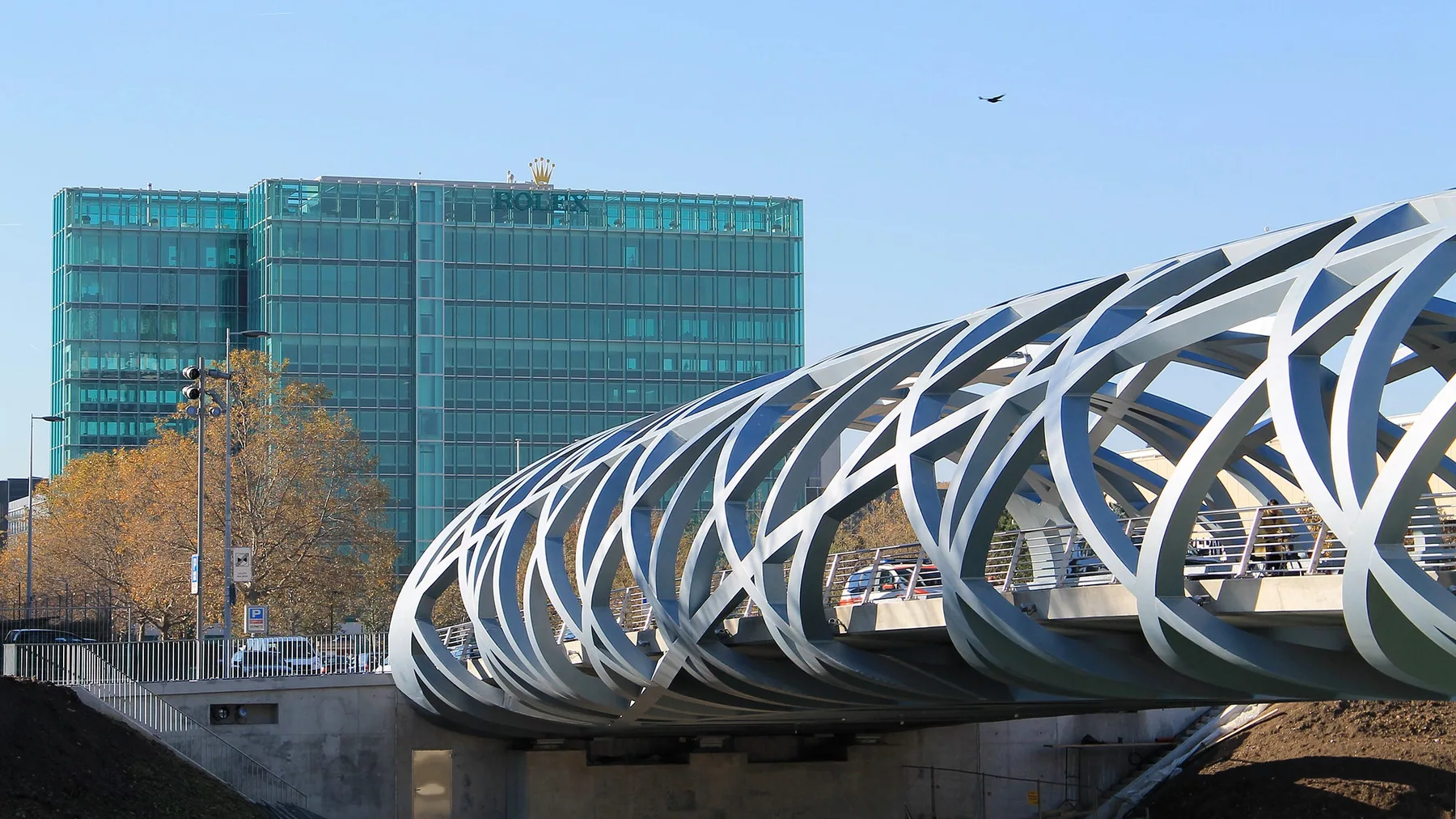
The Hans Wilsdorf Bridge opened in 2012 and served as a gift from the foundation to the city of Geneva, where Rolex is based. This 85-meter long bridge is a reinterpretation of the traditional truss bridge, using overlapping elliptical rings instead of the usual linear steel beams.
The 15-meter broad deck includes two traffic lanes and paths for pedestrians and cyclists, providing the perfect access to the Rolex headquarters situated across the Arve river.
There’s a Bridge that doubles as a Clock
Bridge design presents the perfect opportunity for engineers and architects to push the boundaries of their creativity, given the number of different solutions to solve the deceptively simple challenge of crossing a valley or body of water.
One such example that elevated bridge design to a work of art is the Sundial Bridge in Redding, California.

Located inside the Turtle Bay Exploration Park, the construction of this pedestrian bridge required the preservation of its surrounding area, including the river’s salmon-spawning habitat. The architect chosen for this challenge was the Spanish master bridge designer, Santiago Calatrava.
For this project, Calatrava opted to use one of his trademark designs, a cantilever spar cable-stayed bridge. In this type of bridge, cables attached to a tilted tower suspend the deck without the need for intermediate supports in the river. The weight and angle of the tower relative to the bridge reduce the overturning forces applied to its base.
As a bonus, the 42-degree tilting angle of the tower allows it to act as the gnomon to one of the largest sundials in the world, with its shadow displaying the time on the markings placed on the north garden. How cool is that?
You can buy luxury watches on a bridge
There’s a special place in Italy where the worlds of watches, history, and engineering combine — the Ponte Vecchio (Old Bridge) in the heart of Florence, one of the landmarks of this magnificent city.
It’s believed that the Romans built the first passage through the Arno River, replaced by the current bridge during the Medieval Times.
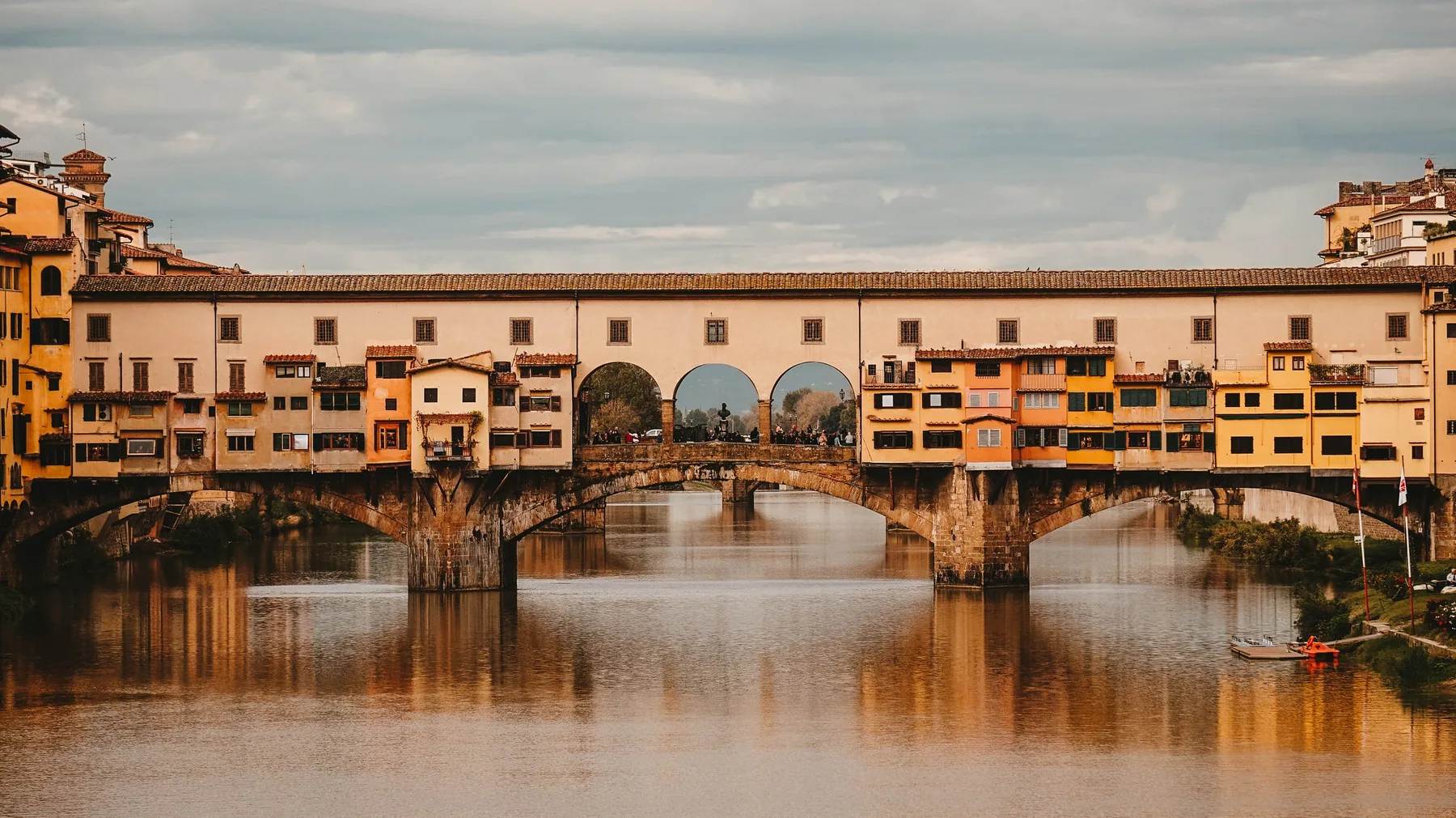
In 1565, the Medici commissioned the Vasari Corridor, a (not so) secret passageway that allowed the rulers of the city to move safely and unnoticed.
Back then, the bridge housed butcher shops and tanneries since it was easy to discard waste by throwing it into the river. These activities created a very unpleasant view and smell, forcing Ferdinando de Medici to order the closing of all meat shops, replacing them with goldsmiths and jewelers.
The decision remains true to the present, with prestigious brands as Rolex and Audemars Piguet opening their boutiques there.
Over the centuries, the bridge survived floods and escaped the World War II bombings, standing as an everlasting Florence symbol.
The next time you cross a bridge, make sure you ‘watch’ it carefully!
The Surprising Connections Between Watches and Bridges was originally published in Watching Watches on Medium, where people are continuing the conversation by highlighting and responding to this story.
Bruno Candeias is a photographer and watch journalist based in Lisbon. He writes here whenever there is something worth writing.