Watches are some of the few personal items that convey more than their physical utility as a time-telling device. They can be a way of showcasing our tastes, personality and vision of the world. Some, with their displays and mechanisms, can even drive us to reflect on the nature of time itself. One such example was the Oris Big Crown Pointer Date I recently acquired, with an unusual complication that sparked my curiosity for the philosophy of time.
But first, a brief context:
The date indication is considered to be the first complication adapted to a wristwatch — a term used in watchmaking to indicate a feature besides the standard time indications.
The basic principle for the date window was kept essentially unchanged since its inception, tracing back to a patent from 1930 by Mimo (a sister company of Girard-Perregaux). It consists on a rotating disk with 31 numbers, only visible on the dial through a small rectangular window. At around midnight, a set of gears advances this disk to its next-day position, changing the date. This action poses some mechanical challenges since the time hands rotate continuously and the date disk needs to “jump” at around midnight while remaining stationary for the rest of the day.
Most modern pieces continue to include this complication, as it adds value and practicality to the watch without major effort or investment (for example, a modern Rolex Datejust sells for an added 1.400 euros over its “dateless” Oyster Perpetual sibling). Yet, a large group of watch enthusiasts see the date window as a sin that should be abolished immediately, arguing that most of them are poorly implemented and ruin the balance of the dial — from mismatched colour disks to awkward window placements, the list of unfortunate examples is endless.
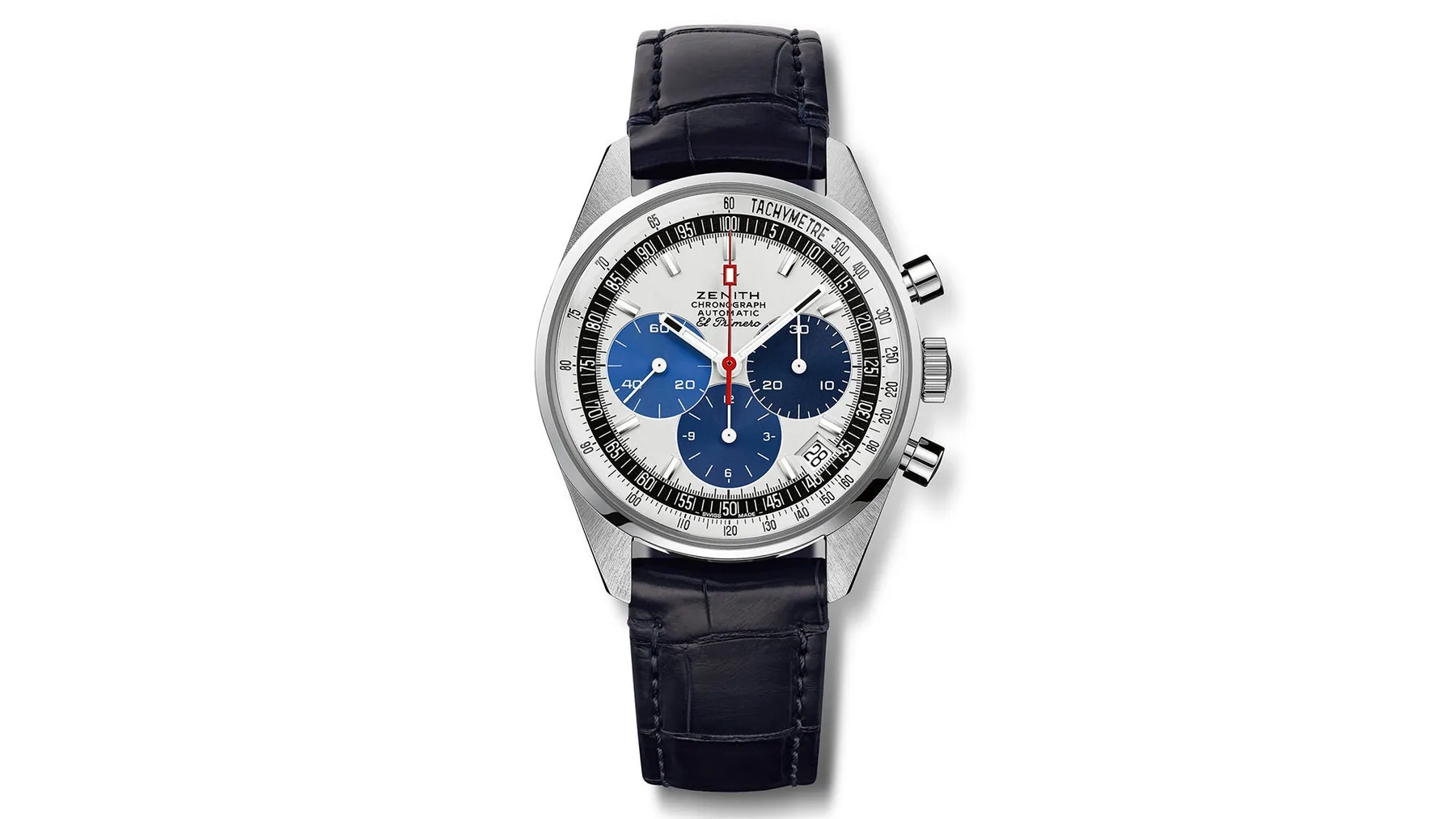
Luckily for us, the watch industry is paying attention offers an alternative for those who demand this complication, but hate having a hole on their precious watch dial.
Pointer Date
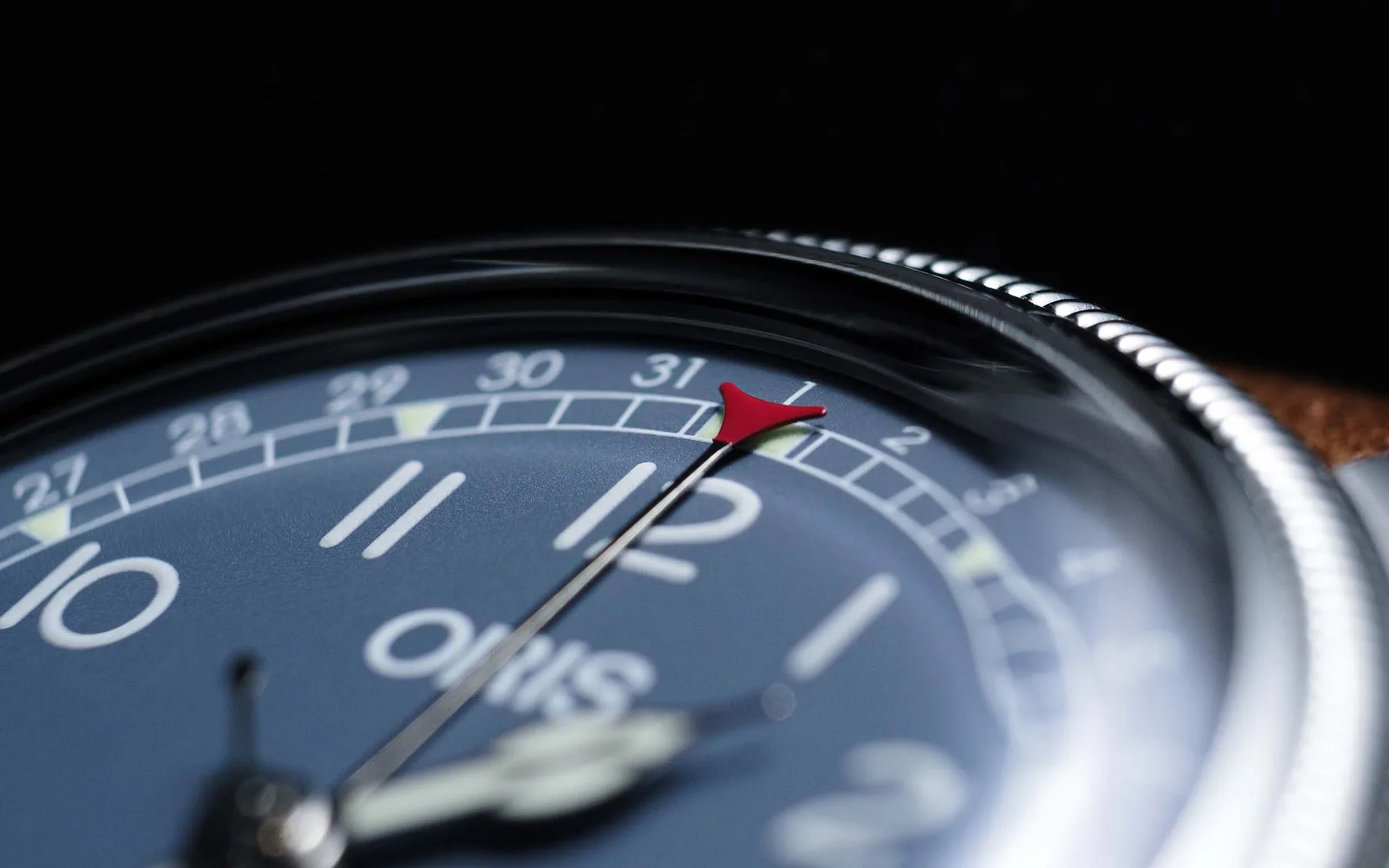
As the name suggests, a pointer date complication uses an additional hand placed co-axially with the hour and minute hands to indicate the day of the month on a printed date track. This indication became popular in the 40s when it was adopted by established brands like Vacheron Constantin and Jaeger-LeCoultre on their annual calendar pieces — although most of these models still went for rectangular windows to indicate the month and weekday.
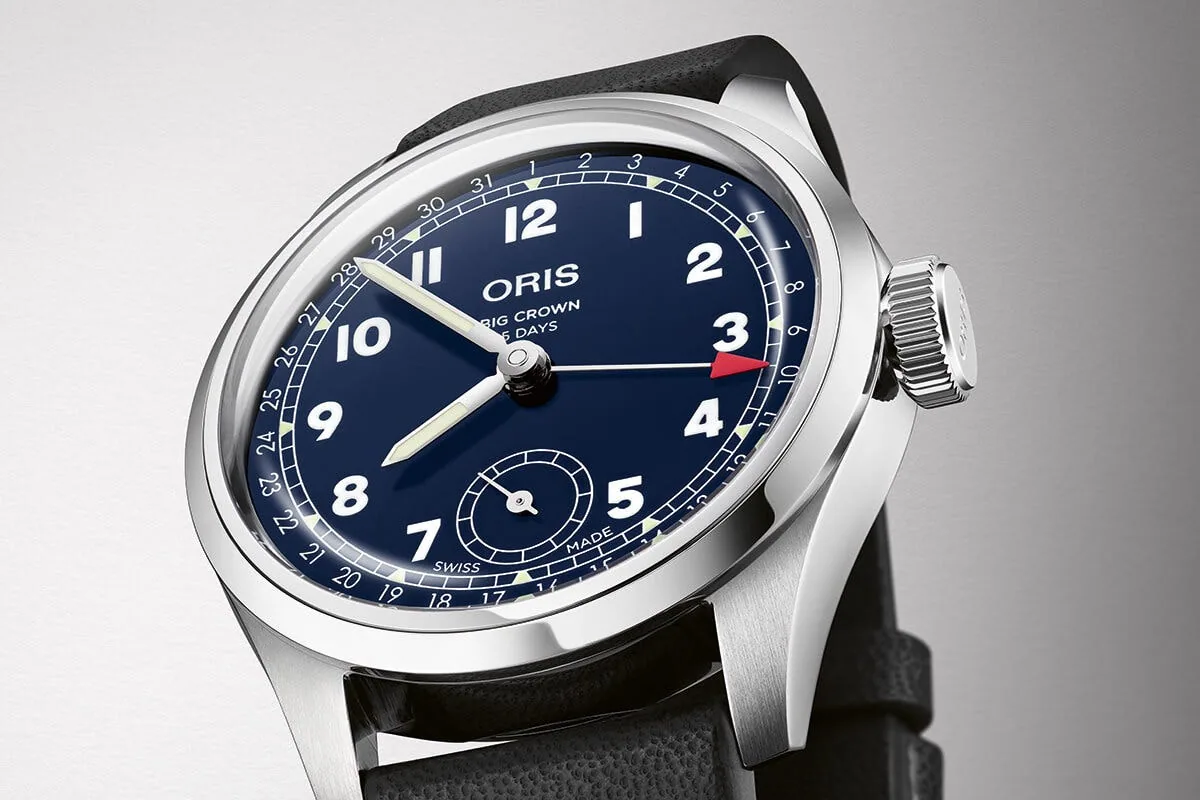
Another example that stood the test of time is the Oris Big Crown Pointer Date, a personal favourite that I wear almost every day. The updated version of this pilot’s watch now features an in-house calibre, with a module that replaces the date disk for the extra date hand. This elegant solution helps to keep the costs down while maintaining a very convenient 5-day power reserve!
The best part is that 80 years since its introduction, high horology brands are still finding creative ways to include pointer dates on their models:
- Richard Habring, the ingenious creator from Austria, found a way to include a pointer date on his (already) complex Habring2 Felix-Doppel Chronograph, forming the base in a stack of five centre-mounted hands.
- Moritz Grossmann is a brand that likes to approach things from an unusual perspective. For their date complication, the German brand developed a mysterious mechanism to drive a peripheral bracket to frame the date instead of a centre hand.
- Earlier this year, Jaeger-LeCoultre redesigned one of their classical models, the Master Control Calendar. With the upgraded movement, the date hand now performs a 90º jump from the 15th of the month to the 16th in order to keep it from obscuring the moon phase indicator — a display of their creativity and technical experience as a movement manufacture.
- Ochs und Junior created a unique hybrid of a pointer date and a standard date window: the dial has 31 holes that form a spiral-shaped pattern, and the date is indicated through the position of a coloured dot. This clever design, explained in detail on their website, improves legibility and contributes to their signature industrial look.
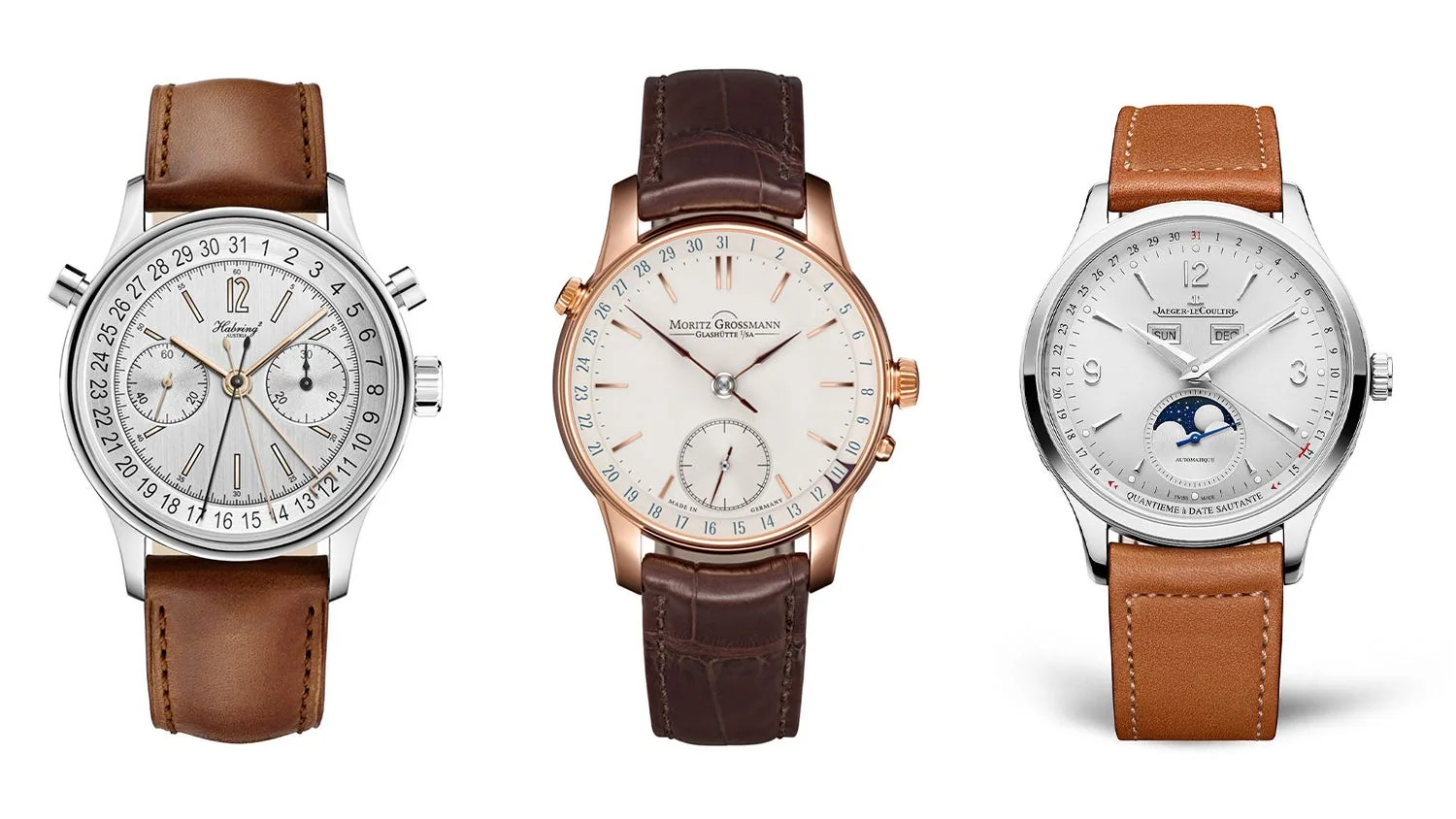
The aesthetical advantages of a pointer date compared to a date window are evident. Without the opening, dials look cleaner and more elegant, preserving the lateral symmetry that so many enthusiasts crave without sacrificing the practical function.
But beyond the visual advantages, I find the philosophical argument for this complication even more compelling.
Circular time
On these watches, the date hand follows a similar path to the minute and hour hands, slowly completing a circle as the month advances. We can visually track its progress and feel the passing of time as a new month approaches, repeating the cycle once again.
A date window shows a number, but a date hand points to a moment in the never-ending loop of time.
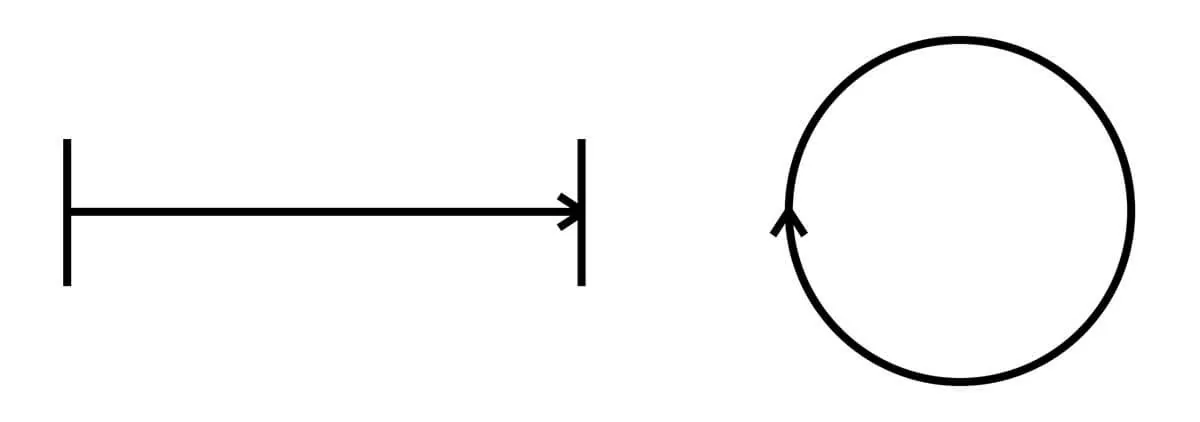
This circular perception of time opposes the more common western concept of a linear timeline — for the majority of us, we tend to view time as a linear progression, from what happened in the past, to how the actions in the present can set us up for the (unknown) future. This notion of time is goal-oriented, assuming that we are always heading towards a final purpose or destination — after all, ‘time is money’!
There are, however, many Westerners looking into the East in search of a more fulfilling and meaningful life. In Asia, where Buddhism and Hinduism are common, time is instead seen as a continuous cycle — seasons repeat every year, days repeat every month. Life doesn’t follow a straight path from A to B, it resembles a spiral, in which you keep coming back to a new starting point after every project or event. No matter how successful you get, you never truly arrive.
While I’m by no means an expert on religion or philosophy, glancing at my watch in moments of stress or sadness does feel therapeutic. While I take a closer look at the dial, I watch the smooth glide of the seconds hand while it sets the pace for the hour and minute hands to complete their rotation. Meanwhile, the date hand stands still, waiting before skipping to her next-day stop, following a cycle without beginning or end.
Maybe the same applies to life, we need a little more patience in the hard times, to jump back when the right moment comes.
The original Portuguese version of this story was posted in Espiral do Tempo.
Pointer Date: apontar não é feio! - Espiral do Tempo
What Are You Pointing At? was originally published in Watching Watches on Medium, where people are continuing the conversation by highlighting and responding to this story.
Bruno Candeias is a photographer and watch journalist based in Lisbon. He writes here whenever there is something worth writing.